Just southwest of Berlin, a short train ride down the River Havel, sits Potsdam — and if you have a spare day, it's the trip I recommend above any other. While Berlin was the capital, Potsdam was where the Prussian kings went to breathe: a green town of lakes, palaces and gardens that later became a stage for some of the sharpest moments of the 20th century. You can pack a lot into a day here, but a little planning makes the difference.
Getting there
Potsdam is easy. The RE1 regional train gets you there from central Berlin in around half an hour, and the S7 S-Bahn takes a little longer but runs constantly. One thing that trips people up: Potsdam lies in fare zone C, so you need an ABC ticket, not the AB ticket that covers the city. Buy it before you board.
Sanssouci — Frederick the Great's retreat
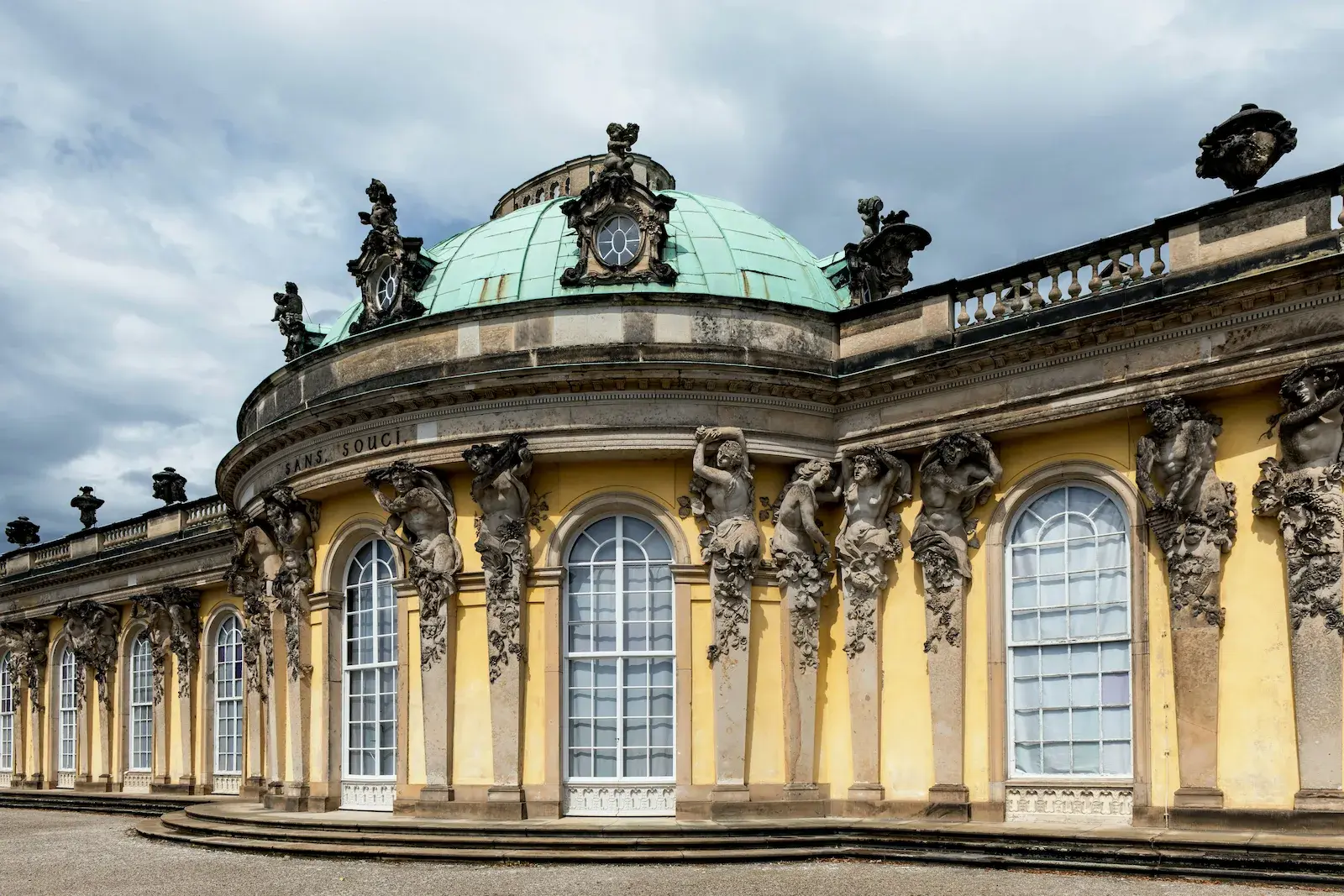
The centrepiece is Sanssouci Palace, built between 1745 and 1747 for Frederick the Great by the architect Georg Wenzeslaus von Knobelsdorff. The name is French — sans souci, "without a care" — and that was the point: a small, single-storey rococo pleasure palace where the king could escape the ceremony of court, play the flute, and argue philosophy with Voltaire, who stayed here for a time.
It sits above a set of terraced vineyards that are lovely in their own right, and the surrounding Park Sanssouci is enormous, dotted with follies — the gilded Chinese House, the grand New Palace, the Orangery. Frederick is buried on the top terrace beside his beloved greyhounds, exactly as he wished. Visitors still leave potatoes on his grave, a nod to the king who pushed the crop on a sceptical Prussia.
Practical tip: entry to Sanssouci itself is by timed ticket, and it sells out early in summer. Book online before you travel. If you want to see several palaces, the sanssouci+ combined ticket is the one to get.
Cecilienhof — where the postwar world was decided
At the other end of town, in a leafy park by the water, stands Cecilienhof — an English-country-house-style palace, the last one the Hohenzollerns ever built, finished in 1917. It looks almost cosy, which makes what happened here all the stranger. In the summer of 1945, this is where Truman, Stalin and Churchill (replaced mid-conference by Attlee) met at the Potsdam Conference to redraw the borders of Europe and settle the fate of a defeated Germany. You can stand in the actual conference room, and see the giant red star of Soviet flowers still planted in the courtyard.
The Bridge of Spies
On the edge of Potsdam, the Glienicke Bridge crosses the Havel to Berlin's Wannsee. During the Cold War this was a frontier between East and West, and three times it was used for dramatic spy exchanges — most famously in 1962, when the Soviet agent Rudolf Abel was swapped for the American U-2 pilot Gary Powers. If the Steven Spielberg film Bridge of Spies rings a bell, this is the bridge. Walking across it, from a Prussian palace town into the old West, is a strange and quietly powerful thing.
If you have more time
- The Dutch Quarter (Holländisches Viertel), a district of red-brick gabled houses built in the 1730s, now full of cafés and small shops.
- Potsdam's own Brandenburg Gate — older than Berlin's, from 1770.
- Babelsberg, the historic film studios where Metropolis and The Blue Angel were made.
- On the way back, the lakeside House of the Wannsee Conference, for those who want to engage with the darker chapter of this landscape.
Is a day enough?
For Sanssouci, the old town and one or two of the Cold War sites — yes, comfortably, if you start in the morning. Trying to see every palace in the park will leave you footsore and rushed; better to choose. What makes Potsdam click is the way three very different Germanys overlap here — the Prussia of Frederick, the ruin of 1945, the frontier of the Cold War. Tying those threads together is exactly what my Potsdam tour is built to do, from Sanssouci's terraces to the middle of the Bridge of Spies.
Related tour
Highlights of Berlin
Landmarks and stories that shaped the city.